
Ecosystem Risk is Enterprise Risk
CTOS™ adds the operational layer traditional third party risk management was not built to provide, mapping your ecosystem, detecting active adversary targeting, and routing Compromise Intelligence into TPRM, SOC, GRC, and business workflows.

Four Layers. One Continuous Counter-Threat Operation.
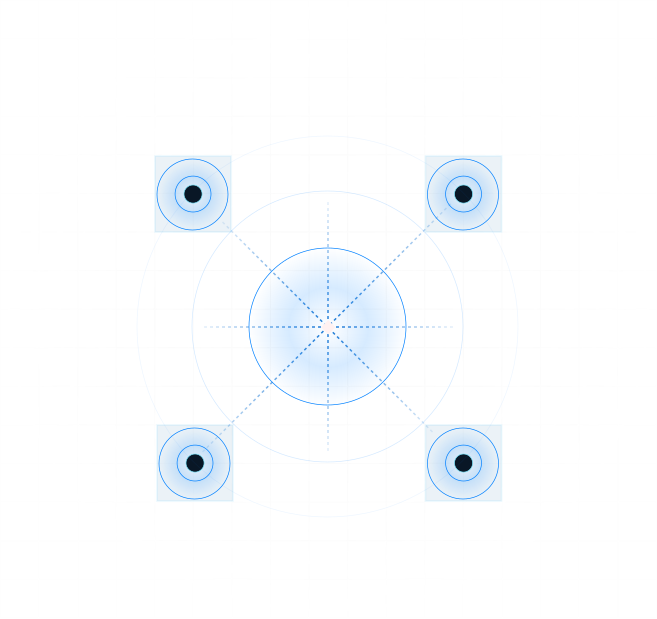


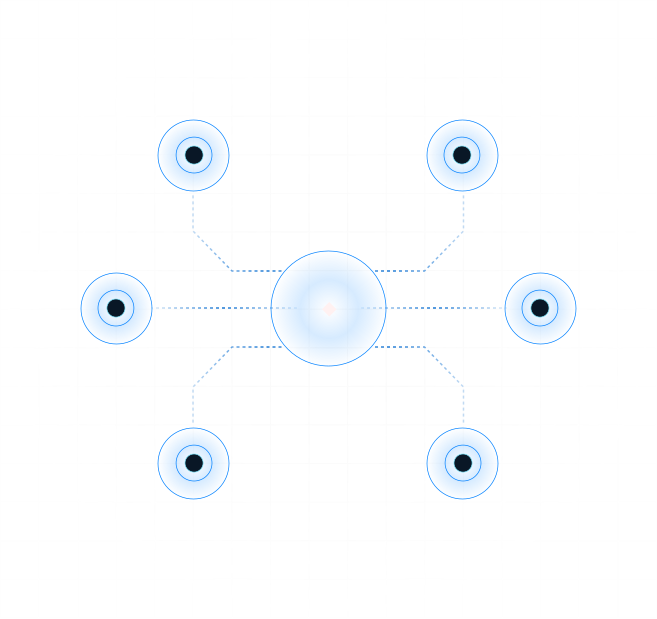
From Intelligence Collection to Operational Outcomes


Full Capability.
Zero Headcount Added.
iCOUNTER operates CTOS™ on your behalf, handling ecosystem mapping, intelligence collection, signal correlation, risk determination, continuous monitoring, and response routing. Your team receives validated, ecosystem-specific Risk Intelligence without managing infrastructure or expanding analyst capacity.
CTOS™ treats intelligence as an operational product, not a report to be filed.

CTOS™ Brings Third Party Risk, Intelligence, and Operations Into Action
Schedule a conversation to explore CTOS against your third party risk use cases.

Frequently Asked Questions
What is CTOS™?
For CISOs, CTOS™ strengthens third party risk management by connecting risk data to operational response. It gives teams real time insights into vendor risk, cyber risks, cybersecurity risks, and security risks that static assessments can miss.
CTOS™ is especially useful when organizations increasingly rely on external vendors that handle sensitive information, customer data, systems access, payments, infrastructure, or business-critical services. It keeps the vendor risk management program intact and adds a detection layer that moves risk teams from documentation to action.
What is TPRM in cyber security?
A mature third party risk management program evaluates whether third party vendors can protect sensitive data, meet compliance requirements, support business continuity, preserve third party compliance, and avoid introducing cyber exposure into the enterprise. Risk assessments should evaluate vendors’ security protocols, data protection controls, financial stability, operational reliability, and alignment with the organization's risk appetite and organization's risk tolerance.
CTOS™ supports third party risk management by adding active compromise detection. CTOS™ helps determine whether a vendor is being targeted now. This improves managing third party risk because teams can prioritize high risk vendors based on active threat context, not only static questionnaire responses or stale security posture indicators.
What are the five steps in the third party risk management process?
Third, teams use ongoing monitoring and continuous monitoring to watch for risk factors that change over time. Continuous monitoring is essential for effective third party risk management because vendor risk exposure does not stay fixed after onboarding. Fourth, teams define risk mitigation actions that can reduce security risks, compliance risk, financial risk, and reputational risk. These actions may include access changes, updated service level agreements, additional access control requirements, or remediation efforts.
Fifth, teams manage offboarding so vendors no longer retain access, data, credentials, or systems after a contract ends. CTOS™ enhances this party risk management program by adding continuous security monitoring for active targeting, compromise signals, and emerging threats.
What are third party risks in information security?
Third party risk also includes compliance risk when vendors fail to meet regulatory compliance obligations or industry controls. It includes reputational risk when vendor failures, unethical practices, or data breaches damage trust. It includes financial risk when vendors fail to meet obligations, disrupt services, or create recovery costs. It includes strategic risk when a vendor relationship creates dependency, concentration risk, or exposure that leadership did not fully understand.
CTOS™ helps reduce third party cyber risks by detecting adversary activity across the supply chain. It identifies active targeting and compromise signals tied to real vendor relationships, then routes action to the right teams. This helps protect sensitive data, minimize risks, and support proactive risk management across complex third party relationships.
How does CTOS™ help with vendor assessment?
CTOS™ improves third party risk assessment by adding live compromise context. A vendor can pass an assessment and still be actively targeted. A security rating can look stable while exposed credentials or adversary infrastructure appear outside the vendor’s direct view. CTOS™ detects that activity and connects it to the risk management strategy.
This gives TPRM leaders a clearer risk profile. High risk vendors can be prioritized by live targeting, not only annual assessment results. Automated vendor assessments and assessment automation software can increase efficiency. CTOS™ adds the active detection dimension that shows which vendors require immediate attention, escalation, or remediation.
How does CTOS™ work with vendor risk platforms and security ratings?
CTOS™ works alongside those investments. It does not replace third party risk management. It enhances third party risk management TPRM by detecting active targeting and compromise signals across your specific ecosystem. When platforms show process and ratings show posture, CTOS™ shows whether adversaries are targeting vendors, domains, identities, or users.
This matters because third party risk changes faster than scheduled reviews. CTOS™ helps CISOs, TPRM leaders, and SOC teams act on validated Risk Intelligence, route findings into existing workflows, and support security and compliance issues without adding a new operational burden.
What types of risks does CTOS address?
CTOS™ can detect credential compromise, domain abuse, fraud patterns, and pre-positioning activity against vendors or SaaS providers. It can also help teams understand which supply chain relationships create material attack surface exposure.
This is important for organizations that rely on third party vendors to handle regulated data, transactions, support operations, and infrastructure. CTOS™ helps manage risks by prioritizing signals based on vendor criticality, data sensitivity, access, exploitability, and blast radius. That makes third party risk management more actionable because teams can see which risks need immediate action.
Does CTOS™ support supply chain programs and business continuity?
Continuous monitoring helps assess vendor risk exposure over time. Ongoing monitoring prevents latent vulnerabilities from becoming threats, and continuous monitoring detects security issues in real time. CTOS™ applies that logic to the supply chain by mapping dependencies, identifying active targeting, and routing counter-threat action before cyber attacks or vendor-originated failures affect the business.
CTOS™ also supports data protection for vendors that process sensitive data or regulated data. For regulated organizations, this can help support regulatory compliance and frameworks such as the Digital Operational Resilience Act. The result is third party risk management that supports business continuity, data protection, and risk mitigation across complex supply chain relationships.
What is the difference between TPRM and GRC?
Third party risk management TPRM often feeds GRC workflows because vendor decisions affect compliance exposure, security and compliance issues, data protection, and business accountability. A party risk management tprm workflow may include questionnaires, due diligence, risk assessments, approvals, contract requirements, ongoing monitoring, and offboarding.
CTOS™ adds active threat intelligence to those workflows. When a vendor shows signs of compromise, CTOS™ can route findings into GRC, SOC, and TPRM processes so risk owners can respond faster. That helps align third party risk management with the broader strategy without forcing teams to rebuild their existing GRC stack.
What is a third-party threat?
Traditional third party risk management evaluates the likelihood and impact of vendor failures. CTOS™ detects active targeting and compromise signals tied to those vendor relationships. That includes exposed credentials, malicious infrastructure, fraud patterns, domain abuse, indicators of compromise, cyber threats, and adversary reconnaissance.
For a chief information security officer, third party threat detection helps answer practical questions. Which vendors are being targeted now? Which relationships create material exposure? Which risks require escalation? Which findings should enter incident response plans? CTOS™ gives security teams and risk owners a way to route validated intelligence into action before third party risk becomes enterprise impact.
Learn More About CTOS™
CTOS™ helps organizations move beyond static vendor reviews and into active third party risk management. It strengthens vendor review, risk assessments, continuous monitoring, and mitigation by showing which third parties are being targeted now and what teams should do about it.
Request a strategic briefing to see how CTOS™ maps your third party ecosystem, identifies active targeting, and routes Compromise Intelligence into TPRM, SOC, GRC, and business workflows.
No long-term commitment. No replacement of existing tools. Just the detection layer your party risk management program has been missing.
Counter threats before they strike.

.avif)